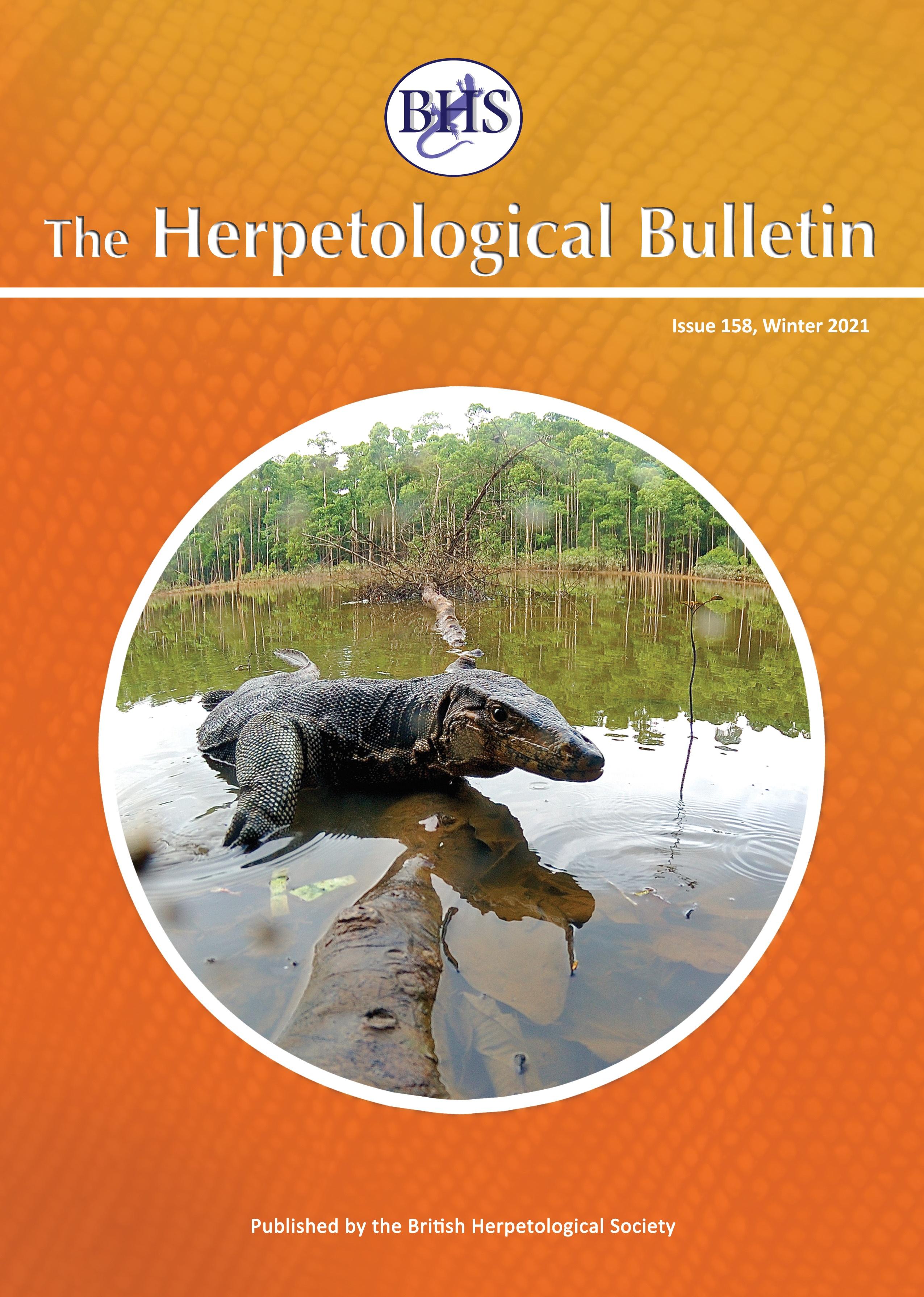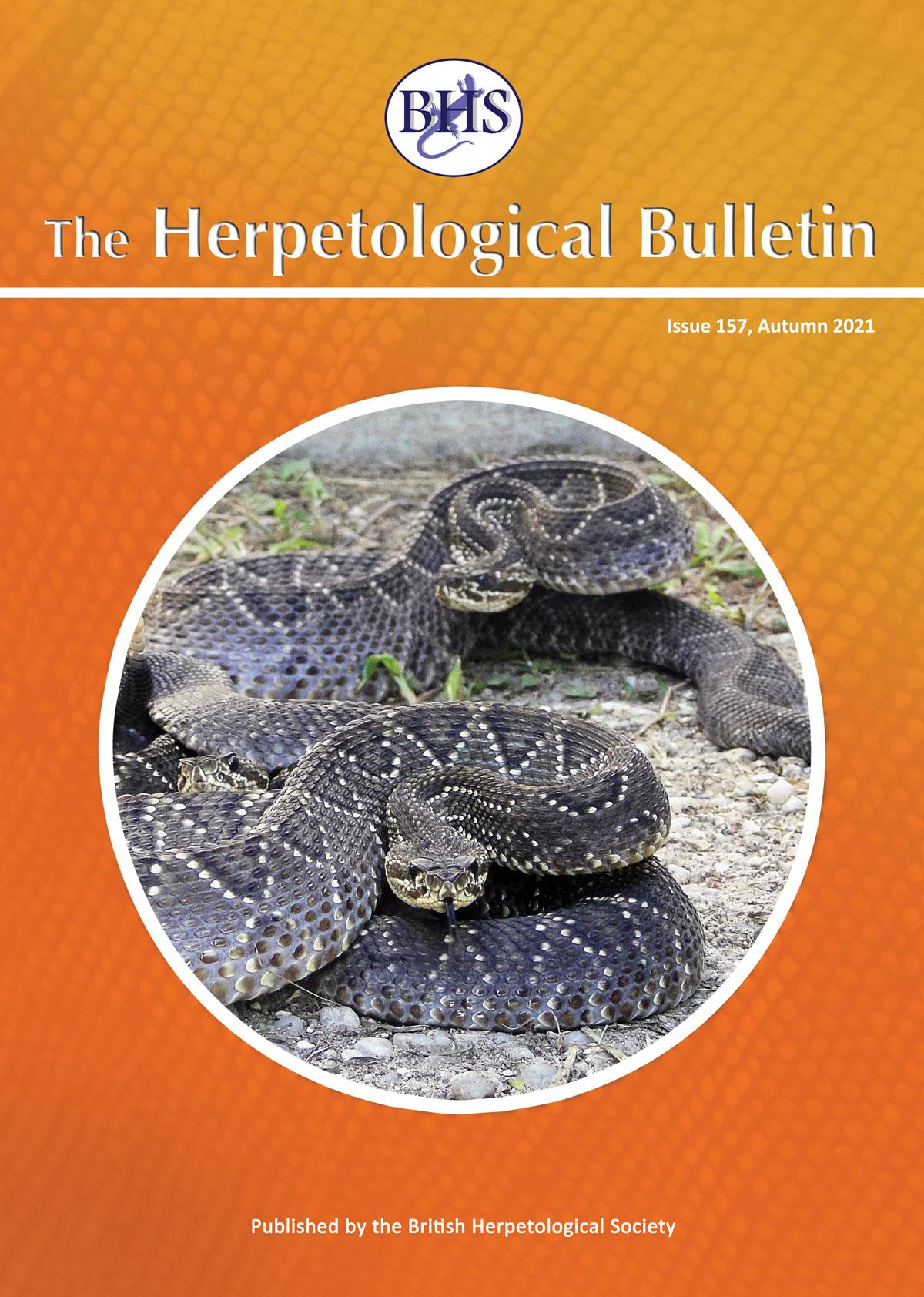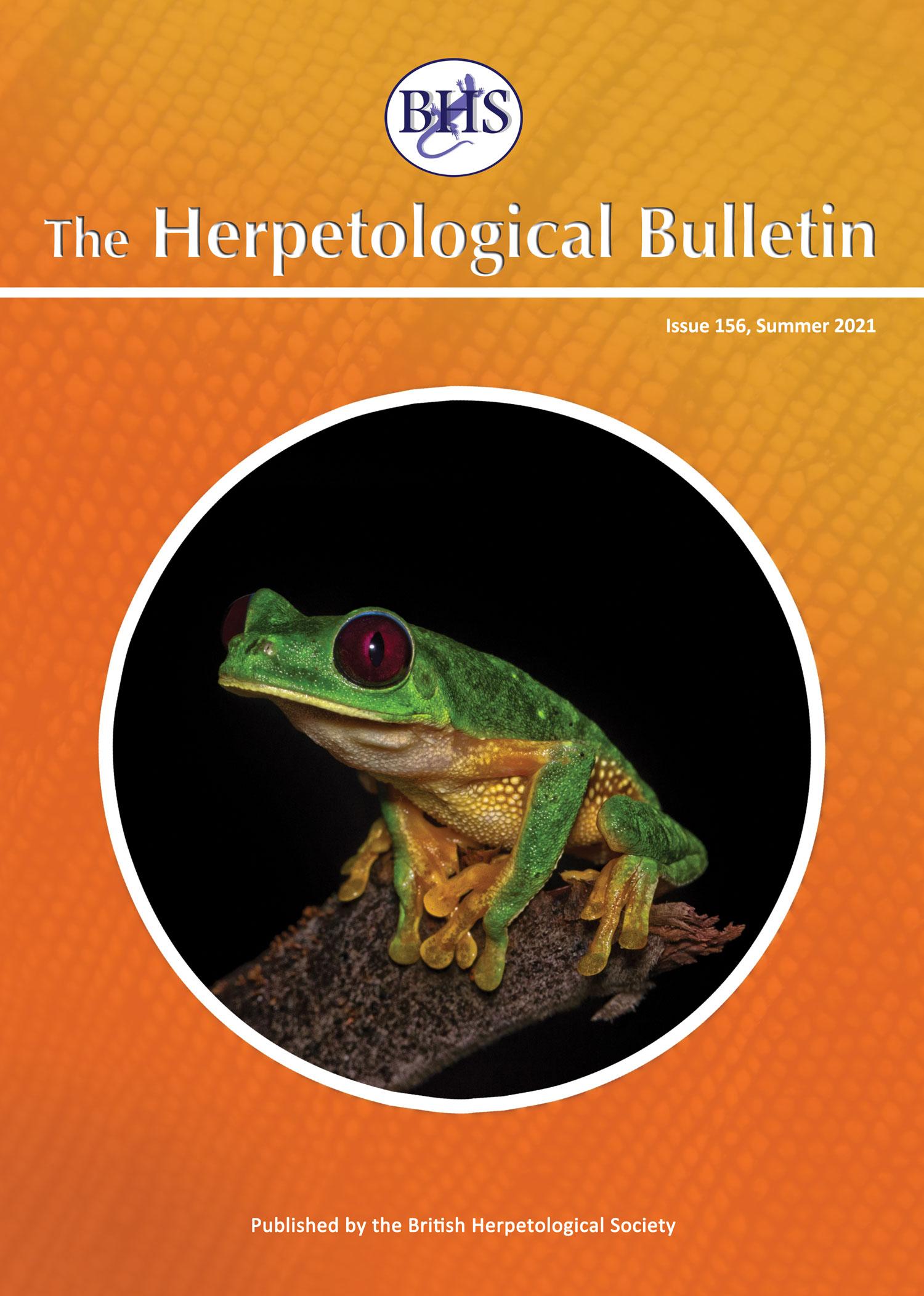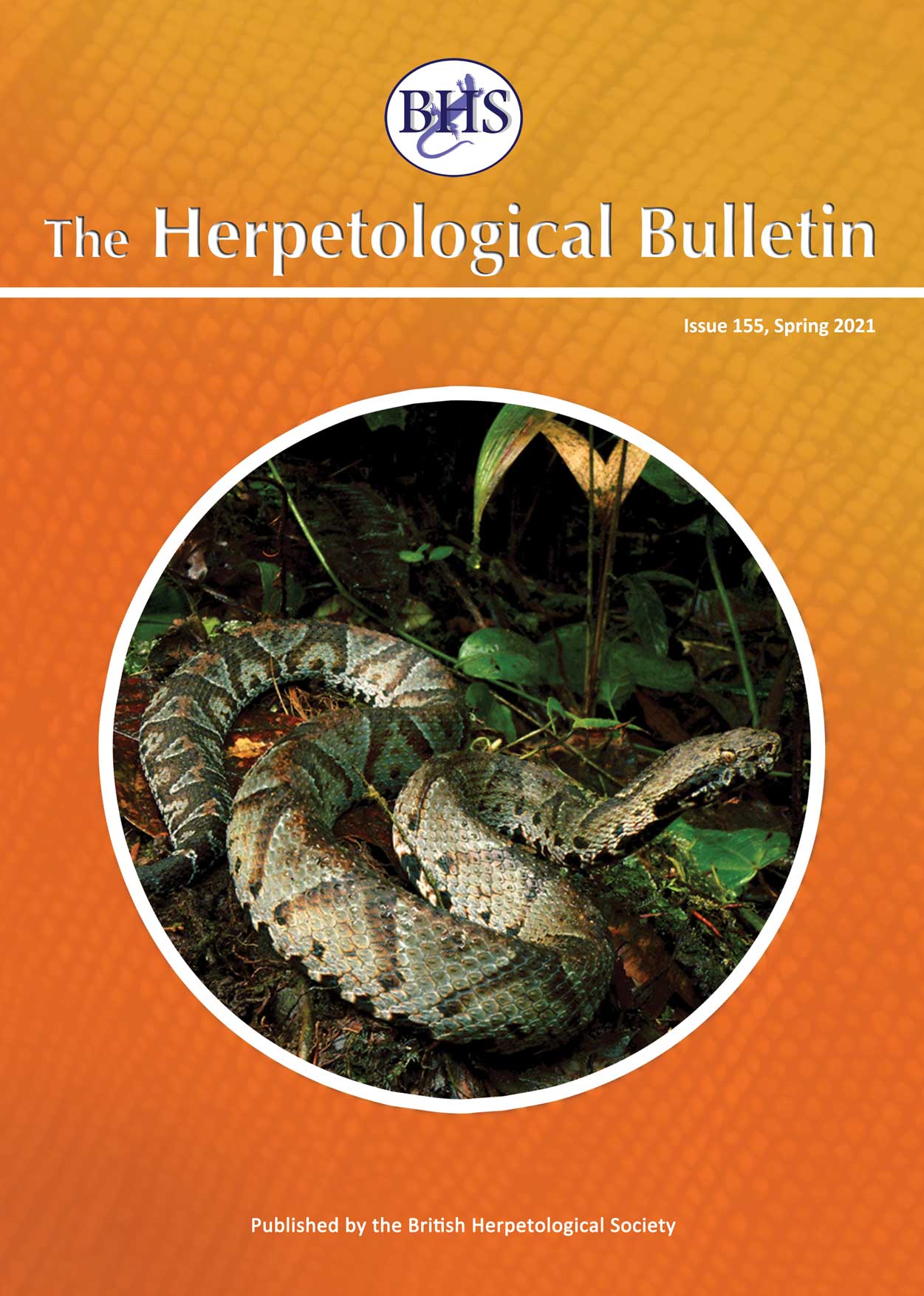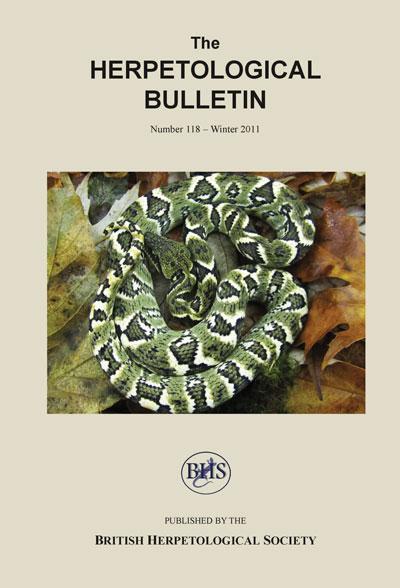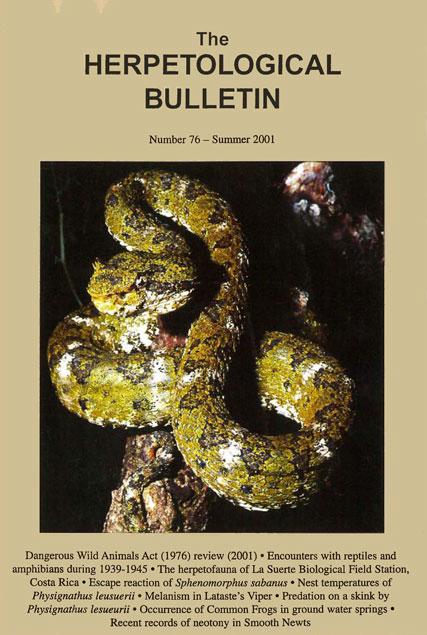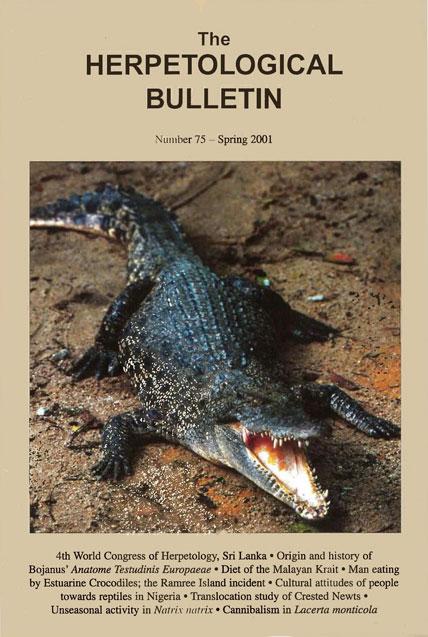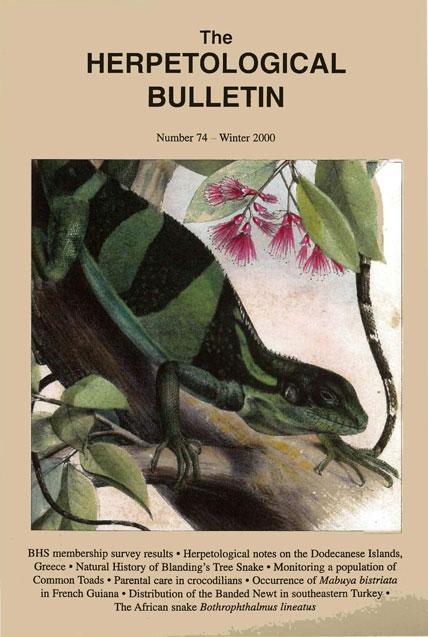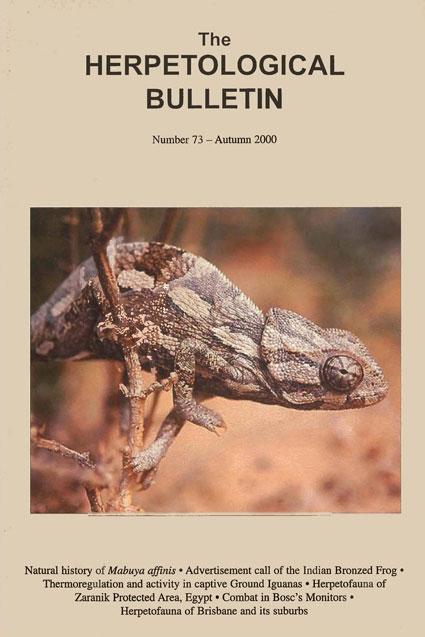

The Herpetological Bulletin |
|||||||||||||||||||||||||||||||||||||||||||||||||||||||||||||||||||
Information for potential authors |
|||||||||||||||||||||||||||||||||||||||||||||||||||||||||||||||||||
The Herpetological Bulletin (formerly the British Herpetological Society Bulletin) is produced quarterly and publishes, in English, a range of features concerned with herpetology. These include full-length papers, book reviews, letters from readers, critiques, institutional / society news, and other items of general herpetological interest. Emphasis is placed on natural history, conservation, captive breeding and husbandry, veterinary and behavioural aspects. Articles reporting the results of experimental research, descriptions of new taxa, or taxonomic revisions should be submitted to The Herpetological Journal. Authors should bear in mind that The Herpetological Bulletin is a semi-technical publication read by herpetologists with a diverse range of interests. The work should therefore have a firm grounding in natural history and preferably appeal to a general herpetological audience. |
|||||||||||||||||||||||||||||||||||||||||||||||||||||||||||||||||||
All submissions and correspondence arising from the Bulletin should be sent to the Editor: Peter Stafford, c/o Department of Botany, The Natural History Museum, Cromwell Road, London SW7 5BD, UK. E-mail: P.Stafford@nhm.ac.uk |
|||||||||||||||||||||||||||||||||||||||||||||||||||||||||||||||||||
|
|||||||||||||||||||||||||||||||||||||||||||||||||||||||||||||||||||
| Submission Guidelines | |||||||||||||||||||||||||||||||||||||||||||||||||||||||||||||||||||
1. Contributions should be submitted preferably in electronic form, either by e-mail or as text files on CD, DVD, or 100 mb zip disk, in Windows format only. The Bulletin is typeset directly from the author’s electronic file, so wherever possible all manuscripts should be prepared using a word-processor. Please indicate word-processing software used, and if possible also include a text-only version of the file. |
|||||||||||||||||||||||||||||||||||||||||||||||||||||||||||||||||||
2. Authors will be informed promptly of receipt of their manuscript and given a time-scale within which it will be published. Acknowledgement of the receipt of work does not indicate acceptance for publication. Contributions are liable to assessment for suitability and ethical issues and all articles included in the main ‘Research’ section are subject to review. The Editor reserves the right to shorten or amend a manuscript, although substantial alterations will not be made without permission of the primary author. |
|||||||||||||||||||||||||||||||||||||||||||||||||||||||||||||||||||
For guidance on how to prepare an article for submission to The Herpetological Bulletin, authors should also consult examples in recently published issues. The following general instructions also apply: |
|||||||||||||||||||||||||||||||||||||||||||||||||||||||||||||||||||
| Natural History Notes Series | ||
Natural History Notes features shorter-style articles documenting observations made of amphibians and reptiles mostly in the field. Articles should be concise and may consist of as little as two or three paragraphs, although ideally will be between 600 and 800 words. Preferred contributions should represent an observation made of a free-living animal with little human intrusion, and describe a specific aspect of natural history. Information based on a captive observation should be declared as such in the text and the precise geographical origin of the specimen stated. With few exceptions, an individual ‘Note’ should concern only one species, and authors are requested to choose a keyword or short phrase that best describes the nature of their observation (e.g., Diet, Reproduction). The use of photographs is encouraged but should replace words rather than embellish them. Contributions are accepted on the premise that they represent an original and previously unreported observation, and may be edited prior to acceptance. Standard format for this section is as follows: |
||
| Scientific name | ||
| (Common name; the abbreviation ‘NCN’ should be used where none is recognised): Keyword. Text (there are no constraints on how information is presented but the date, time and locality (with full map co-ordinates if possible) must be included, as should precise details on the nature of the observation with some discussion of its significance, and references to pertinent literature). If the information relates to a preserved specimen, its catalogue number and place of deposition should also be given. References should be cited in the style described for main articles). Then leave a line space and close with name and address details in full. | ||
| Illustrations: | ||
High resolution scanned images (TIFF or JPEG files on CD or 100mb zip disk) are the preferred format for submission of illustrations, although good quality slides, colour and monochrome prints are also acceptable. It is possible also to reproduce line drawings, graphs, and charts if executed clearly in black ink or printed with a high quality computer printer; these should be submitted in a form suitable for electronic imaging with the orientation of the image indicated on the back. All illustrations should be entirely relevant to the text and numbered sequentially with Arabic numbers (i.e. Table 1; Figure 1). Authors are advised where possible to submit copies of illustrations rather than originals, as the BHS can regrettably not accept any responsibility in the event of their loss or damage. Slides, artwork, and other original material will be returned following publication. |
||
| Publications schedule | ||
| Authors will be informed promptly of receipt of their manuscript and given a time-scale within which it may be published. Acknowledgement of the receipt of work does not indicate acceptance for publication. Contributions are routinely assessed for suitability and ethical issues, for which the advice of one or more external referees may be sought; in particular, work that has involved the killing or other use of animals, or the collection of endangered species or disturbance to their habitat(s), will require full justification. The Editor reserves the right to shorten or amend a manuscript, although substantial alterations will not be made without permission of the primary author. | ||
| Page proofs will be sent to the primary author (or other if indicated) and should be returned to the Editor by return of post or the date specified. Alterations on the proofs should be limited where possible to spelling mistakes and typographical errors – the inclusion of additional text or deletion of text should be avoided if at all possible as this will affect typesetting. | ||
| Authors are provided with a portable document file (pdf) of their article and will also receive a complimentary copy of the full printed issue. Slides, artwork, and other original material will be returned following publication. | ||