
BHS Gharial Project
The project has a goal of significantly improving breeding success for this iconic and endangered species at the Gharial Breeding Centre in the Chitwan National Park in Nepal.

The project has a goal of significantly improving breeding success for this iconic and endangered species at the Gharial Breeding Centre in the Chitwan National Park in Nepal.
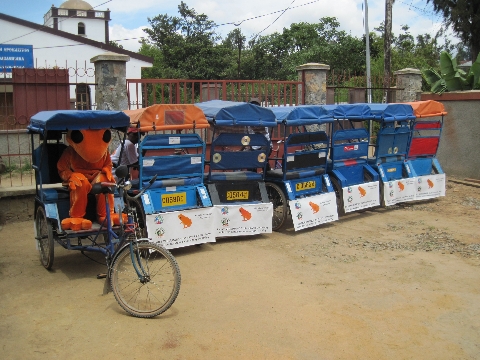
A three partner collaborative project studying the conservation and sustainable utilization of the Golden Mantella (Mantella aurantiaca) of Madagascar.
Status Update 2020: Successfully completed project
This applied project will involve thorough surveys to map the distribution and conservation status of the very rare Belalanda Chameleon (Furcifer belalandaensis) from the SW of Madagascar, and draw up a plan for its future protection
Status Update : Successfully completed project
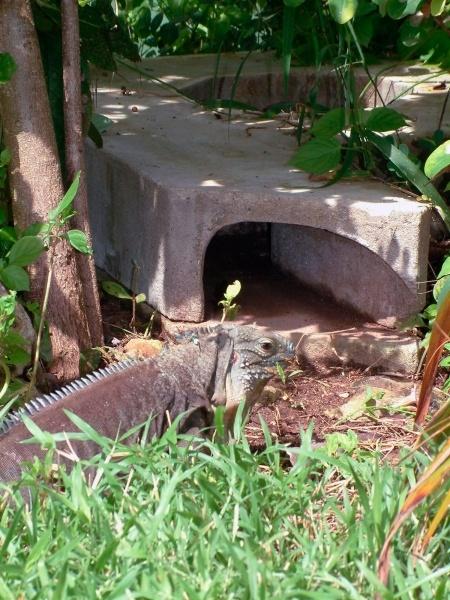
This CBC project grant was awarded to the Blue Iguana Recovery Programme (BIRP) in 2007, based on Grand Cayman, in order to help with the captive breeding and conservation of the critically endangered Blue Iguana (Cyclura lewisi).
Status Update: Successfully completed project
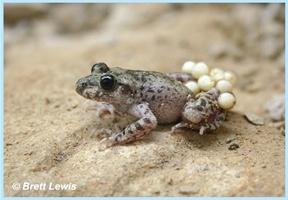
With time quickly running out for Mallorcan Midwife toads - or ferrerets - herpetologists and conservationists were swift to take appropriate measures to ensure the continued survival of the species. Combining re-introduction, in-situ and ex-situ research, a diverse educational programme, and captive breeding, the Mallorcan conservation authorities initiated 'The Mallorcan Midwife Toad Recovery Programme' in 1985 with support from the Durrell Wildlife Conservation Trust (formerly the Jersey Wildlife Preservation Trust), The Durrell Institute of Conservation and Ecology (DICE) at the University of Kent; Stuttgart Museum; The Open University; Barcelona Zoo; and Marineland (Palma de Mallorca). This integrated approach has helped to secure the immediate future of this critically endangered amphibian.
Durrell became involved with the species at the request of the Mallorcan Government. It was arranged for a number of toads to be transported to Jersey to form the nucleus of a captive breeding programme. Fortunately, the husbandry, breeding and rearing of the toads proved to be relatively easy and the associated housing and equipment required similarly uncomplicated. One of the primary aims of the programme was to generate captive bred toads and tadpoles for re-introduction to the wild. The first re-introductions were carried out in 1989 and have occurred on an almost annual basis since then.
Mallorcan Midwife Toad
Mallorcan Midwife Toad
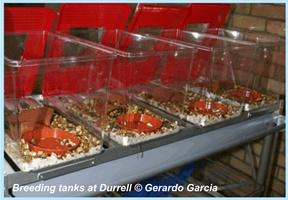 Breeding tanks at Durrell
Breeding tanks at Durrell
Breeding tanks at Durrell
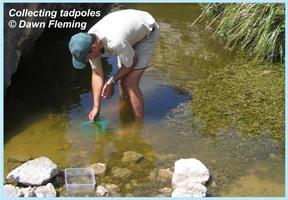 Collecting Tadpoles
Collecting Tadpoles
Collecting Tadpoles
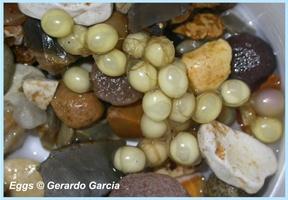 Eggs
Eggs
Eggs
Eggs
Towards the end of 1996, a decision was made to collect fresh breeding stock from the wild for captive breeding. This was to make certain that as wide a genetic base as possible was represented in the captive colonies. New stock was collected from three different wild populations in isolated gorges – 25 tadpoles were collected from each site. These three populations were maintained and bred separately in order to maintain the integrity of potentially genetically distinct groups. This is because in their homeland, the toads cannot cross from gorge to gorge and, as such, little pockets of toads have been reproductively isolated for up to 2,000 years.
The BHS was much impressed by the recovery programme and in 1999 the Society's Captive Breeding Committee awarded a project grant to Durrell. The grant helped to fund new facilities for Durrell's Herpetology Department and financed important, pioneering health-screening work on wild Mallorcan Midwife toad populations.
Today, Mallorcan Midwife toads are held and bred at a number of other European institutions including; The Durrell Institute of Conservation and Ecology (DICE) at the University of Kent; Stuttgart Museum; The Open University; Barcelona Zoo; and Marineland (Palma de Mallorca). Annual surveys are taking place and a reserve has been proposed to help protect the species. The number of suitable sites for re-introduction is limited, so work is currently focusing on the creation of new pools.
As a direct result of Durrell's Mallorcan Midwife Toad Recovery Programme, 25% of the current wild population in Mallorca now originates from captive bred toads. The distribution of the toad has increased by 100% since the instigation of the recovery programme. Moreover, from its estimated range of 100km2 in the early 1980s, the species is now believed to occupy a range in the region of 200km2. Twelve new breeding sites have been established since 1989 through re-introductions of captive bred toads. This compares with an estimated thirteen original wild sites.
Through concerted efforts, the status of the Mallorcan Midwife toad has certainly been improved. The species is now the only amphibian species to have been downgraded on the Red List from 'Critically Endangered' to 'Vulnerable' as part of the 2004 IUCN/SSC Global Amphibian Assessment.