

The Herpetological Journal
The Herpetological Journal is the Society's prestigious quarterly scientific journal. Articles are listed in Biological Abstracts, Current Awareness in Biological Sciences,Current Contents, Science Citation Index, and Zoological Record.
ISSN 0268-0130
2023 Impact Factor for the Herpetological Journal is 1.1, with the Journal sitting just below Quartile 2 in Zoology, at percentile 46.9
03. Haematological study of freshwater turtles from anthropogenically impacted and non-disturbed environments of Argentina
1 download
Subscription / purchase required
DOI: https://doi.org/10.33256/36.4.249260
pp. 249-260
Authors: Rocío M. Sánchez & Leandro Alcalde
Abstract: Haematological studies provide valuable information on the health condition of wild populations and can serve as indicators of environmental stress. The present study evaluated the effects of water quality on the haematological parameters of two freshwater turtle species, Hydromedusa tectifera and Phrynops hilarii, across streams with contrasting land use (urban and rural) in Buenos Aires province, Argentina. Fieldwork was conducted during the austral spring and summer between 2016 and 2018. Blood samples were collected from 57 adult H. tectifera and 26 adult P. hilarii of both sexes to perform direct counts of red and white blood cells (RBC and WBC), determine the leucocyte profile and calculate the heterophils/lymphocytes (H/L) stress index.
Both species exhibited the leucocyte types typical of turtles (heterophils, eosinophils, lymphocytes, monocytes and basophils), with no marked interspecific morphological differences. Water quality significantly influenced immune cell profiles in both species: percentages of heterophils (%H) were significantly higher in turtles from impacted urban sites than in those from rural low-impact sites, whereas percentages of eosinophils (%E) were significantly lower in individuals from urban high-impact streams (and in P. hilarii also from rural moderate-impact streams) compared with those from rural low-impact sites. Monocyte percentages (%M) were significantly higher in individuals of both species from rural moderate-impact sites. In H. tectifera, males showed significantly higher RBC counts and lymphocyte percentages (%L), and lower %M, than females. This study provides the first description of the haematological parameters of H. tectifera and the first assessment of these parameters in wild populations of P. hilarii. The reference values reported here provide a useful baseline for future conservation and long-term monitoring of wild populations of both species.
Keywords: red blood cells, white blood cells, leucocyte profile, Hydromedusa tectifera, Phrynops hilarii
Download Access:
The latest 8 issues can be downloaded when logged in with a Herpetological Journal subscription membership.
Individual articles can be purchased for download.
Older issues and occasional Open Access articles are available for public download
Submissions:
For further information and submission guidelines please see our Journal Instructions to Authors

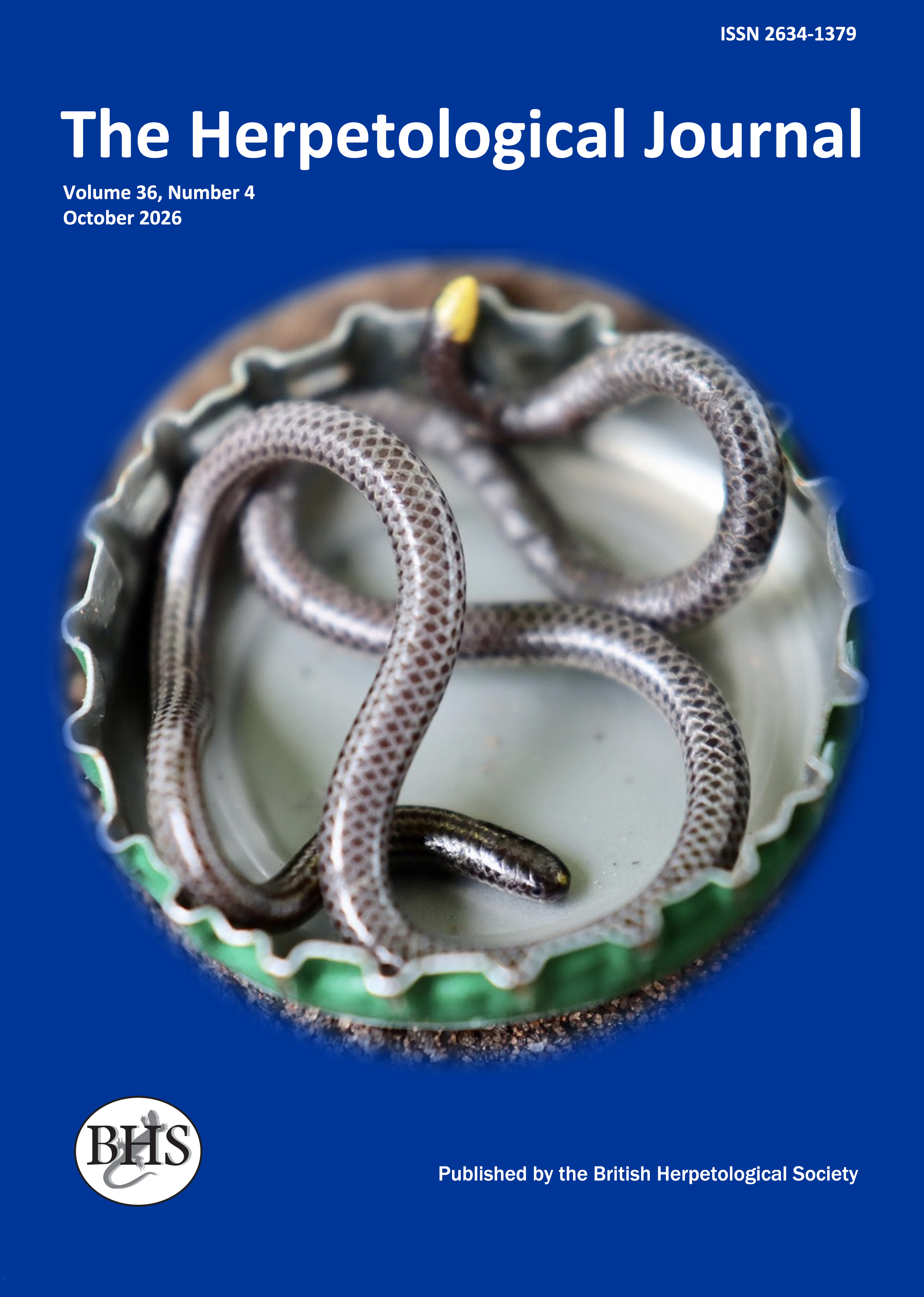
Latest Issue
IMPORTANT NOTE - JUNE 2020
Please note that as from Volume 31 Number 1 (January 2021) on, the Herpetological Journal will be available as an online publication only - the last print edition will be Volume 30 Number 4.
Aligning with this change, it is now no longer possible to purchase a subscription that includes a print copy of the HJ. All members who have existing HJ print subscriptions that remain active as at end June 2020 will receive the full four 2020 print editions. New subscribers or renewals after this time will only have option to subscribe to the online only subscription package. Subscription pricing has been amended to reflect the content changes.